 OilGasService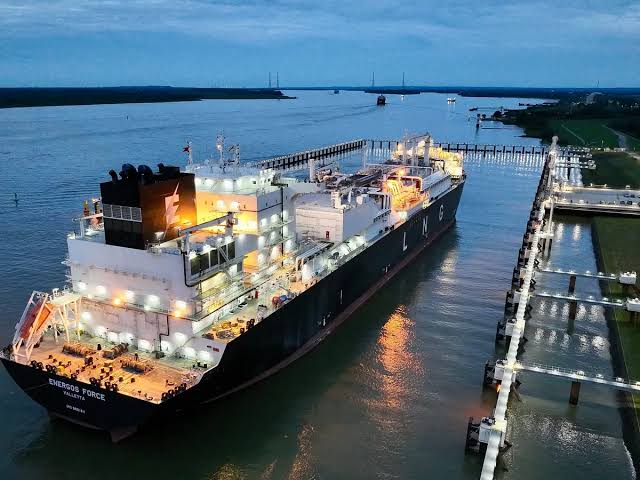
Germany readies fourth LNG import terminal for upcoming winter
Germany’s Deutsche Energy Terminal (DET) is closing in on starting up the country's fourth liquefied natural gas import terminal following the arrival of the Energos Force floating storage and regasification unit.
The terminal at Stade-Butzfleth is key to helping Germany meet its gas import demands for the upcoming winter, as gas storage levels remain low in the country and around Europe.
DET said in a statement on Wednesday that the terminal is planned to start supplying gas to the country’s grid in November after taking its first delivery earlier the same month.
“With an injection capacity of up to 3.2 billion cubic metres of natural gas per year by 2027, the Stade LNG terminal will be an important component of Germany’s security of supply,” German Energy Minister Katherina Reiche said, according to the statement.
However, the FSRU's actual gas send out capacity will depend upon various factors such as weather conditions and the size of delivered cargoes and other factors, DET said.
In winter, the vessel can regasify up to 500 million cubic feet per day of gas (about 14.2 million cubic metres per day) using steam boilers in a closed-loop system, while in summer it can ideally regasify up to 750 MMcfd (21.2 MMcmd) using Elbe River water in an open-loop system, according to the operator.
Stade is the fourth LNG import site approved by German authorities to help source alternative natural gas supplies following the halt in Russian gas flows in the second half of 2022.
DET already operates two FSRUs at Wilhelmshaven and one at Brunsbuttel, while Deutsche ReGas operates an FSRU in Mukran, with each of the facilities commissioned between December 2022 and May 2025.
Initially planned to be up and running in the first half of 2024, the Stade LNG terminal was repeatedly delayed due to project management disputes, unfinished terminal infrastructure, regulatory requirements, and the difficulty of building an LNG import facility under a tight schedule.
While waiting for onshore work to complete in Stade, the Energos Force was temporarily relocated to Jordan to supply gas to the country’s power plants and help supply Egypt with volumes during peak demand periods before sailing to its final destination at Stade.
With only a few weeks remaining before 1 November, when European nations usually start withdrawing gas from storage as temperatures drop, European Union underground storage facilities remain about 68.5% full, according to Gas Infrastructure Europe (GIE).
This year, EU bloc members had a target to achieve a 90% storage level between 1 October and 1 December.
According to GIE, Germany’s gas storage was below the EU average at 56% as of 15 September.
Author: Vladimir Afanasiev